The real face of Cuba
Break out of the all-inclusive box to meet ordinary Cubans
Andrew Renton , Freelance
SANTIAGO, Cuba - The young waitress, wearing a smile and a well-worn sheen to her blue serge skirt, made my selection. "Criolla Deliciosa" (delicious local food) was boldly emblazoned in white chalk across the blackboard.
My opinion of Cuban fare as a gastronomic nightmare was to be challenged yet again. Chicken, fried to a crisp? Canned sardines? Bread that fragments into low flying missiles at the mere approach of a knife?
No -- this time it was a pork steak, large and tough enough to resole my Rockports. I manage a grin "Mmm - deliciosa indeed," praying that my crowns would hold!
I have opted for a small, government-owned (they all are), hotel in Ciega de Avilar. With rundown balustraded sidewalks and horse-drawn traffic, the town has a hint of the Wild West. Oddly the toilet flushes with hot water that the shower fails to deliver. Otherwise, the price seems reasonable at 25 CUC (convertible pesos) or around $30 Cdn which includes breakfast.
There are two ways to visit Cuba. The all-inclusive resorts of Varadero, Holguin and Cayo Coco provide an all-you-can-eat, all-you-can-drink closeted beachfront experience. A great way to spend an "it's all about me" week, away from the bills, boss, winter blahs -- and well away from real Cubans who are banned from resort areas.
When Russia collapsed, the peso tanked. Fidel Castro's revolution guaranteed free medical, education, housing, and a ration book granting subsidized staples for life. Imported fuel, parts, and medicines require scarce "hard" currency.
In 1990, Castro announced a "special" period. Oxen replaced tractors. Horse-drawn wagons replaced local buses. All very cute for a "Kodak moment" but tough for a people used to modern amenities.
To get around, Cubans still catch open cattle-trucks to official hitchhiking points along the autopista. Vehicles with blue licence plates are government-owned and required, by law, to pick up passengers.
An arrangement to visit granny in the next town can be hazardous unless booked weeks in advance on the much cannibalized, shrinking bus fleet.
Breakfast brings the same grinning waitress. She carefully arranges a basket of week-old bread, a watery "cafe Americano," and an omelette the size of a wafer-thin hockey puck, then suddenly launches herself forward to "buss" me on both cheeks. "Buenos dias Senor." McDonald's could learn from this server!
To reach Santiago, Cuba's second largest city, my choices are limited. Hitchhiking sounds romantic but impractical for the 400-kilometre trip. Car rental at $75 CUC a day is over the top. Trains run at night and all flights are full.
The government owns a fleet of comfortable tourist buses which run between popular centres, via rest stops where a limp cheese sandwich will set you back a cool $3 CUC-- a week's pay to a local. Ticket prices on "Viazul" buses rival Canadian Greyhound at around $6 CUC per journey hour.
Cubans are banned from tourist accommodation -- Fidel's unsporting way of intervening between lustful foreigners and the amorous overtures of hot-blooded Chicas and Cabana boys -- (It seems the urge for an illicit dalliance is no longer a male bastion). But "amor" did find a way -- for a while anyway. To fill the void, illegal "Casas Particulares" or Bed & Breakfasts, proliferated like mushrooms on a soggy log.
Alas in 1996, the state thwarted these cupids' corners by bringing them under a similar regulatory blanket. Transgressors faced fines or even loss of their homes.
Two blue inverted V's displayed above a door like a military ranking, indicate approved tourist accommodation. For $25/$30 CUC a night this is a great way to meet real families, throw some money into private pockets and, with luck, enjoy a decent home-cooked meal. (Much of what you pay is taxed back by the government.)
In Santiago, I haul my pack from the bus depot into a waiting coco-taxi. The yellow snail-shaped vehicle has three wheels, a set of handlebars and an open-fronted roof which curves shell-like over the back and side and acts as a "rain scoop" in downpours.
Most doorways on the narrow lane bear the inverted blue V. I opt for a tall house requiring a full flight of stairs to reach the entrance. Maybe there'll be a view?
Arturo leads me through his home. Stone steps take me up to a room on the roof and a view of the bay. I will share my penthouse with a cunning cockroach the size of a sand crab -- for a few days anyway. The vociferous pig, tethered by day on the neighbour's roof, sleeps peacefully at night -- in their kitchen -- away from light fingers.
Arturo is a single, 40-something, English teacher at the medical school. His monthly income of $30 CUC a month is double the national average. My daily rent of $30 CUC pushes him into the upper middle-class. For an extra bit of "convertible cash" he will prepare black-market lobster and rum-based mojitos.
He beckons me furtively to a pile of rusting iron sheets stacked vertically under the staircase. An assortment of chains holds them together. "They'll steal anything they can get their hands on," he announces, unlocking the hasp of each padlock with a separate key. Eventually the last sheet is freed and laboriously pulled aside.
A shard of sunlight catches the polished chrome exhaust pipe. His baby, a gunmetal grey motor scooter built in Czechoslovakia, a 1963 CZ-175, glints from within its secret lair.
"You buy the gas; I'll show you around," he adds, relishing the thought of being financed to indulge his weekend hobby.
I park my 6-foot-3 frame on the passenger seat. We race up and down steep alleys. An agitated man stands at the curb with two bleach bottles filled with fuel. Three convertibles are snatched from my hand and stashed hastily into his trouser pocket.
"My friend was a doctor, now he drives the school minibus. It broke down when the mechanic was on sick leave. He used his own hard-earned cash to fix it privately."
"Wow," I respond, trying to imagine a Canadian driver digging out his Visa to keep things rolling. "Fidel sure knows how to pick 'em!"
But this is Cuba. "Luxuries" from toothpaste to toilet paper can only be purchased with hard currency from the 600- plus government-owned "convertible currency stores." The duties of my "hero of the people's paradise" include collecting and delivering food for school lunches -- from which he skims enough to feed his family with a little left over to trade.
Furthermore, his weekly gasoline allowance provides a chance to siphon off a few litres for the black market. Ah, the bleach bottles. "As a driver, he earns way more than a doctor, but if the bus breaks down ...?"
I lose the rest as we speed up into some serious hairpin bends. At the hilltop restaurant a top-notch band is belting out salsa to the gyrating crowd. The lead dancer from The Tropicana nightclub has just married a Dutch businessman three times her age.
"She wants to leave the country and needs to marry a foreigner to get a passport," adds Arturo, eyeing my quizzical, and slightly envious, look.
Survival for the average Cuban is a constant struggle. Water shortages and power outages are normal fare. Meagre rations of cooking oil are often replaced with rendered pig fat by month's end. Soap is a luxury as are razorblades and pens.
An indomitable spirit. The kindnesses. The music. The artwork. The smiles. These are the qualities that bring people back again and again. Break out of the box -- go and see the real thing!
IF YOU GO:
- VISAS: Not necessary for Canadians.
MONEY: One convertible peso (CUC) is about $1.3 Cdn.
- FOOD: To supplement the lack of restaurants outside major centres, the government has licensed private in-home "Paladares" allowing a maximum of two tables. Meals cost around $9 to $15 C for lobster. The food is vastly superior to normal restaurant/hotel fare. You will find these places easily as touts on the street will constantly approach you hoping for a commission.
- Note: It is better to book in the afternoon so the owner can shop to order.
- ACCOMMODATION: Casa particulares are the way to go. Mine varied from a historic mansion in Trinidad to a simple bungalow in Vinales where the table always groaned with delicious dishes. The tastefully renovated colonial Hotel Gran in Camaguey was also a great find with excellent buffets and a pool. Phone ahead to avoid disappointment.
- UNOFFICIAL CASAS PARTICULARES: The government has cracked down on these establishments which pay no taxes. There is a snitch network not to mention the ire of legitimate operators to contend with. Avoid, unless you don't mind being turfed out by the authorities during the night.
- CAR RENTALS: The government has a hand in every enterprise in Cuba so the prices generally are non-negotiable. The longer the term, the cheaper the rate. You are required to buy a tank of gas with no refunds at the end. Check the gauge before departing. Short filling is rampant. Cuba is frustratingly short of road signs and maps.
- SAFETY AND SECURITY: Cuba is the safest country in the world in which to travel, but take normal precautions. Avoid talking politics with your hosts. Big Brother is everywhere and the jails are filled with political prisoners and journalists.
- WHAT TO TAKE: The climate is hot. Sunscreen. A good map. Flashlight for blackouts. Cubans are short of everything:clothes, pens, soap, makeup, nylons, razors, blades -- the list goes on.
- COMMUNICATIONS: A few lucky people have computers and e-mail but the Internet is blocked. You must show your passport at official centres to access hotmail or webmail. Expensive international calls can be made from telephone offices. Internal calls are cheap. Post is unreliable. People will ask you to mail their letters from your home country.
- TIPPING AND MONEY: Canadian credit cards can be used and travellers cheques can be cashed at resorts, high-end hotels and banks. Tourists can rarely use local pesos. Tipping is survival for many and a chambermaid will cover you in kisses for a small gratuity left in the room.
USEFUL GUIDEBOOKS: Moon Handbooks Cuba by Christopher Baker is excellent. Lonely Planet does a moderate job, but is easier to follow.
http://www.canada.com/topics/travel/story.html?id=de46e7f4-ef87-44b8-a130-a6141c9828c8
Tuesday, February 05, 2008


Casa particular Villa Sensation, Nueva Gerona


Villa Sensation
Casa particular Villa Sensation offers a large apartment with 2 bedrooms, living room, kitchen and bathroom. The owner offers meals on the top level of the house, which is equipped with a small kitchen and 2 tables and chairs to eat and to drink.The apartment can be used for up to 4 people and offers privacy and security. The house is just a few blocks from the center (calle 39) and the owners offer good quality and nice service.
Sr. Roberto Suares Nunez
Calle 16 No. 5176 e/51 y 53
Reparto Abel Santamaria
Nueva Gerona
Isla de la Juventud
Cuba
Tel: 0053 46 322679
Tel: 0053 46 323661
E-mail:
zurdo69@correodecuba.cu

Website: http://villasensation.awardspace.com/


Tuesday, December 26, 2006
Rock climbing by Cubans discouraged
Posted on Tue, Dec. 26, 2006
CUBA
Rock climbing by Cubans discouraged
Rock climbing -- an extreme sport brought to Cuba by foreigners -- has begun to irk the Castro regime as an outside influence.
The Wall Street Journal
VINALES, Cuba - Seventy feet up a sheer limestone cliff known as La Cuchillita, or Little Blade, 17-year-old Roylandi González held onto a ledge by his fingertips. Then he glanced down to check the harness around his waist, grabbed hold of the rope that was tethered above him and started shimmying downward.
Over the past several years, adventurous Cuban youths like González, schooled by an influx of foreign rock climbers, have turned this western town into an extreme-sport magnet. Climbers test their mettle on dramatic crags, barely touched by man, which soar above a green valley designated as a U.N. World Heritage Site.
But climbers who have conquered Viñales' jagged peaks are now up against a more formidable obstacle: the Communist political system.
González cast a wary eye for park rangers and police.
''There's something about rock climbing that really seems to worry our government,'' he said.
As Cubans begin contemplating life after Fidel Castro, rock climbing has emerged as an improbable battleground between the government and young Cubans eager to embrace the latest foreign fashions.
PERMIT REQUIRED
In 2003, amid a broad crackdown on civil liberties and fraternizing between tourists and Cubans, the government announced that rock climbers henceforth would be required to obtain a special permit. But the government has never granted the required permit to the many climbers who have requested one.
Adrian Pérez Martínez, a 20-year-old art teacher, says that police showed up at his house recently to warn him against climbing, especially with foreigners. ''Good Cubans don't do this,'' he says they told him. ''Climbers use drugs. And you shouldn't take foreigners to militarily significant areas.'' Indeed, some caves in Viñales are designated as civil-defense sites in the event of a U.S. invasion.
Some of the official anxiety over climbing seems to be based on Cuba's revolutionary history. The revolution that brought Castro to power in 1959 was launched from a clandestine encampment in the Sierra Maestra Mountains on the eastern end of the island. ''The Revolution was the work of climbers and cavers,'' Castro is reported to have said.
Now the government may be worried that history will repeat itself. 'The system is paranoid about Cubans' private activities, but especially when those activities are occurring in hills away from sight and when foreigners are involved,'' says Vitalio Echazabal, one of the first Cubans to take up rock climbing in the 1990s. 'The authorities would ask, `Are they spies? What are they plotting up there?' ''
Echazabal got so fed up that he defected to Spain during a climbing expedition in 2001, one of three Cuban climbers who have escaped the island during international sporting events. About a half-dozen others got off the island after marrying foreigners they met on the hills.
The exodus of climbers has only served to intensify official suspicion of the sport. ''Climbers are very independent people, and the Cuban government has a real hard time with anything it cannot control -- even a form of recreation,'' says Armando Menocal, a 65-year-old Wyoming lawyer who is the leading international proponent of Cuban climbing. Menocal, who runs the Cubaclimbing.com website, has been caught in the backlash himself.
TURNED BACK
Beginning in the late 1990s, Menocal, who has family ties to Cuba, started training Cuban climbers, mapping local routes and importing donated equipment. But after about 15 climbing trips to Cuba over the past eight years, Menocal has been turned back by immigration officers at the Havana airport the last two times he tried to visit, most recently earlier this month. The authorities, he says, offered no explanation.
The 100 or so climbers remaining in Cuba would certainly welcome his return. Without official funding, Cuban climbers rely on equipment sent by Menocal or donated by tourists. José Luis Fuentes, a 20-year-old climber, says his shoes were given to him by an Italian, his rope by a Canadian and his harness by an American. ''You speak a common language with other climbers no matter where they come from,'' he says.
`CRAZY KIDS'
He isn't sure it's a language Cuba's leaders could understand. ''Older people just think we're a bunch of crazy kids,'' says Fuentes.
Climbing has attracted a special breed of Cuban youth since Menocal and some American friends used a slide show to recruit a core group of about half a dozen Cuban climbers in 1999. One Cuban went AWOL from his military unit to go on an outing with Menocal, subsequently earning two weeks in the brig.
Official eyes were watching. ''The Cubans were always being persecuted because it was not looked upon favorably to socialize with foreigners,'' says Craig Luebben, a rock-climbing guide and journalist from Colorado who has made several trips to Cuba. As the pressure increased, the Cubans and their American climbing partners would avoid appearing together publicly, arranging separate transportation to a rendezvous at the secluded climbing site, Luebben says.
Climbers say official government climbing policy has been inconsistent. A few years ago, Hollywood, a cigarette brand partly owned by the government, launched an ad campaign featuring a climber. Yet at around the same time, a visiting Menocal was called before two different government authorities and told climbing wasn't permitted.
The inconsistencies continue today. On a recent day at the park visitors center near the Viñales climbing site, there were large posters of climbers in action. Nevertheless, the park ranger on duty insisted that climbing without a permit wasn't allowed under the 2003 law. ''It's not something one should even consider,'' he said, though he had no idea how one might go about getting a permit.
The climbers are regrouping under the leadership of Alexei Suarez, a medical worker who sometimes reaches his second-story Havana apartment by scaling the wall. He has been talking with government officials, trying to better climbing's image, and he says the Cuban sports ministry has been very supportive. ''We are loyal Cubans who want to make Cuba famous for climbing champions,'' Suarez says.
CUBA
Rock climbing by Cubans discouraged
Rock climbing -- an extreme sport brought to Cuba by foreigners -- has begun to irk the Castro regime as an outside influence.
The Wall Street Journal
VINALES, Cuba - Seventy feet up a sheer limestone cliff known as La Cuchillita, or Little Blade, 17-year-old Roylandi González held onto a ledge by his fingertips. Then he glanced down to check the harness around his waist, grabbed hold of the rope that was tethered above him and started shimmying downward.
Over the past several years, adventurous Cuban youths like González, schooled by an influx of foreign rock climbers, have turned this western town into an extreme-sport magnet. Climbers test their mettle on dramatic crags, barely touched by man, which soar above a green valley designated as a U.N. World Heritage Site.
But climbers who have conquered Viñales' jagged peaks are now up against a more formidable obstacle: the Communist political system.
González cast a wary eye for park rangers and police.
''There's something about rock climbing that really seems to worry our government,'' he said.
As Cubans begin contemplating life after Fidel Castro, rock climbing has emerged as an improbable battleground between the government and young Cubans eager to embrace the latest foreign fashions.
PERMIT REQUIRED
In 2003, amid a broad crackdown on civil liberties and fraternizing between tourists and Cubans, the government announced that rock climbers henceforth would be required to obtain a special permit. But the government has never granted the required permit to the many climbers who have requested one.
Adrian Pérez Martínez, a 20-year-old art teacher, says that police showed up at his house recently to warn him against climbing, especially with foreigners. ''Good Cubans don't do this,'' he says they told him. ''Climbers use drugs. And you shouldn't take foreigners to militarily significant areas.'' Indeed, some caves in Viñales are designated as civil-defense sites in the event of a U.S. invasion.
Some of the official anxiety over climbing seems to be based on Cuba's revolutionary history. The revolution that brought Castro to power in 1959 was launched from a clandestine encampment in the Sierra Maestra Mountains on the eastern end of the island. ''The Revolution was the work of climbers and cavers,'' Castro is reported to have said.
Now the government may be worried that history will repeat itself. 'The system is paranoid about Cubans' private activities, but especially when those activities are occurring in hills away from sight and when foreigners are involved,'' says Vitalio Echazabal, one of the first Cubans to take up rock climbing in the 1990s. 'The authorities would ask, `Are they spies? What are they plotting up there?' ''
Echazabal got so fed up that he defected to Spain during a climbing expedition in 2001, one of three Cuban climbers who have escaped the island during international sporting events. About a half-dozen others got off the island after marrying foreigners they met on the hills.
The exodus of climbers has only served to intensify official suspicion of the sport. ''Climbers are very independent people, and the Cuban government has a real hard time with anything it cannot control -- even a form of recreation,'' says Armando Menocal, a 65-year-old Wyoming lawyer who is the leading international proponent of Cuban climbing. Menocal, who runs the Cubaclimbing.com website, has been caught in the backlash himself.
TURNED BACK
Beginning in the late 1990s, Menocal, who has family ties to Cuba, started training Cuban climbers, mapping local routes and importing donated equipment. But after about 15 climbing trips to Cuba over the past eight years, Menocal has been turned back by immigration officers at the Havana airport the last two times he tried to visit, most recently earlier this month. The authorities, he says, offered no explanation.
The 100 or so climbers remaining in Cuba would certainly welcome his return. Without official funding, Cuban climbers rely on equipment sent by Menocal or donated by tourists. José Luis Fuentes, a 20-year-old climber, says his shoes were given to him by an Italian, his rope by a Canadian and his harness by an American. ''You speak a common language with other climbers no matter where they come from,'' he says.
`CRAZY KIDS'
He isn't sure it's a language Cuba's leaders could understand. ''Older people just think we're a bunch of crazy kids,'' says Fuentes.
Climbing has attracted a special breed of Cuban youth since Menocal and some American friends used a slide show to recruit a core group of about half a dozen Cuban climbers in 1999. One Cuban went AWOL from his military unit to go on an outing with Menocal, subsequently earning two weeks in the brig.
Official eyes were watching. ''The Cubans were always being persecuted because it was not looked upon favorably to socialize with foreigners,'' says Craig Luebben, a rock-climbing guide and journalist from Colorado who has made several trips to Cuba. As the pressure increased, the Cubans and their American climbing partners would avoid appearing together publicly, arranging separate transportation to a rendezvous at the secluded climbing site, Luebben says.
Climbers say official government climbing policy has been inconsistent. A few years ago, Hollywood, a cigarette brand partly owned by the government, launched an ad campaign featuring a climber. Yet at around the same time, a visiting Menocal was called before two different government authorities and told climbing wasn't permitted.
The inconsistencies continue today. On a recent day at the park visitors center near the Viñales climbing site, there were large posters of climbers in action. Nevertheless, the park ranger on duty insisted that climbing without a permit wasn't allowed under the 2003 law. ''It's not something one should even consider,'' he said, though he had no idea how one might go about getting a permit.
The climbers are regrouping under the leadership of Alexei Suarez, a medical worker who sometimes reaches his second-story Havana apartment by scaling the wall. He has been talking with government officials, trying to better climbing's image, and he says the Cuban sports ministry has been very supportive. ''We are loyal Cubans who want to make Cuba famous for climbing champions,'' Suarez says.
Monday, December 04, 2006
Casa Nayi, Plaza, Havana
Casa particular Casa Nayi
Nayda Martin Rodriguez
No. 618 B Perfecto Lacoste
e / Maso y Emilio Nunez
Plaza de la Revolucion.
Plaza, La Habana
Phone: +53 7 878 5292
E-mail: Casa Nayi
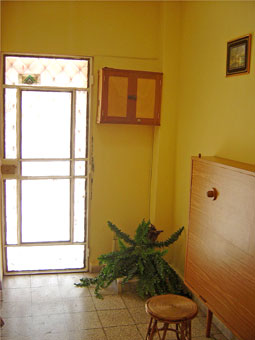
Nayi offers you a clean, private apartment in the Plaza de la Revolucion neighbourhood of Havana.
A 1 minute walk from the bus station, 2 mins from the Plaza (the Marti Memorial, Ministry of Communication and Che Guevara mural). Very close to Estadio Latinoamericano. The neighborhood is quiet, safe and residential, but in a central location - close to Vedado, Centro Habana and Habana Vieja
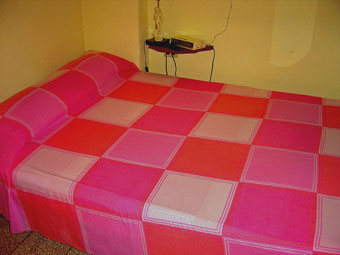
The apartment has three rooms: a front room, a kitchen/eating area and a bedroom with bathroom on suite. Fully functional shower with hot water in the bathroom. The house is clean, and very secure. Bedroom has one double bed and a large dresser/cabinet for clothing. Kitchen is fully stocked with cookware, plates, utensils, etc and has a fridge/sink.
Price for complete apartment is
$ 25 - 30 CUC (Peso Cubano Convertible) per night depending on the season
Fully licensed by the government.
Casa Mercedes, Trinidad, Cuba
Casa particular Mercedes Albalat Milord
Calle Josè Martì no.330
entre Simòn Bolìvar y
Francisco Javier Zerquera
Trinidad, S.S. CUBA
CP 62600
Phone and fax: +53 (0)419-3350
E-mail: ico974@hotmail.com
The house is located between Viazùl pullman station and Parque Cespedes.
The casa is fully licensed with a "bed and breakfast" and a restaurant license:
The house has 3 bedrooms for rent:
- bedroom 1 : 1 bed for 2 persons, conditioned air and electric fan and 1 independent bathroom with warm water.
- bedroom 2 : 1 bed for 2 persons, conditioned air and electric fan and 1 independent bathroom with warm water.
- bedroom 3 : 3 beds for 4 persons, conditioned air and electric fan and 1 independent bathroom with warm water
All the bedrooms are in the house where all the family live, eat and sleep.
There is only one (shared) entrance to the house.
Prices: Rooms cost from 15 to 25 Peso Convertible (CUC) per night.
Meals: breakfast CUC2/3, lunch and dinner CUC 6/8.
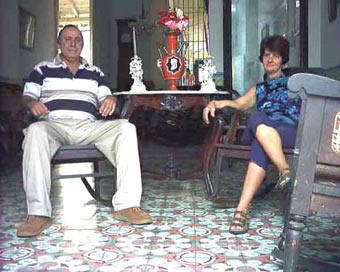
The hosts, who are between 40 and 50 years old, are Carlos and Rebecca, a very good cook.
Ask Rebecca especially for her "langosta en salsa" and her "camarones en grille".
There is more though: you can try a lot of others exquisites dishes.
Ask Carlos for his "puerco asado" (meat) or his "pargo asado" (fish).
The rooms are cleaned on a daily basis and sheets are changed frequently.
You can have your clothes washed an ironed without any problem.
The house has also a "patio", a living room with television, video-recorder and hi-fi.
If you need a bicycle, Carlos can rent you 2 Chinese / Russian "flyers" for 2$ per day.
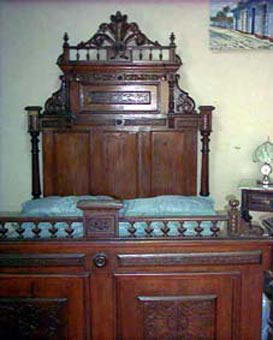
The house has many furnishings and objects of the colonial age and is listed in the Lonely Planet guide.
For bookings, let me help you: I call Mercedes' family about every day.
They are in daily contact with taxi drivers: for example Josè Martì Airport La Habana - Trinidad usually costs 25 CUC by taxi.
Friday, December 01, 2006
Casa Mercedes,Old Havana, Cuba

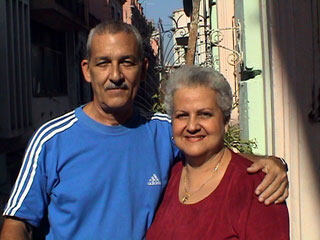
Casa particular Casa Mercedes
O'Reilly No 506, 1st floor
e/y Villegas y Monserrate
Habana Vieja.
Tel (53 7) 8634493
Email: mailto:jormer506@hotmail.com?subject=Casa%20Mercedes
Casa particular "Casa Mercedes" is a clean and welcoming "casa" (bed and breakfast) on O'Reilly, one of the main streets through Old Havana.
Their good nature and charm will make you feel at home right away. Stay in a place that takes you back in time to the days of Hemingway. A place that offers a resting place close to Cuban daily life.
Beyond the balcony of the house the real Cuba passes by. You just need to go down the stairs to not feel, but be part of that life. No other place offers you this experience.
The house in in walking distance from all the sight of Habana Vieja. La Floradita (the daiquiri place of Hemingway) is two blocks away as is the Capitolio. Hotels, bars and restaurants are close by.
The casa particular offers two clean rooms with baths opening on the patio allowing privacy.
The rooms have air-conditioning, fans, hot water 24/24.
You will sleep in all tranquility in the center of Old Havana.
The rooms are 25 - 30 Peso Convertible or it's Euro equivalent depending on the season.
Mercedes provides a great breakfast for a couple of dollars. Other meals are available as well at your request.
Friday, November 24, 2006
Casa Colonial, Santiago de Cuba
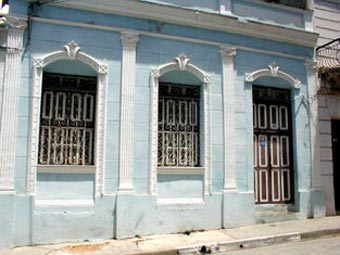
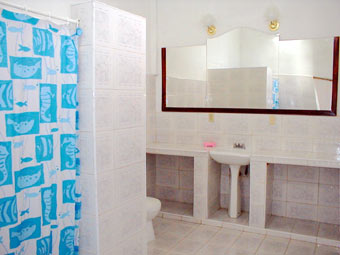
CASA COLONIAL
ROLANDO Y LAUDELINA.
Calle Cornelio Robert (Jaguey) No. 115
entre Gallo y Escudero.
Santiago de Cuba.
Lic. 103-99
Teléfono: +53-22-653042
Email: Casa Colonial Mail
It has retained it's original colonial features like the layout of the house, the high ceilings and the original woodwork.
The 2 rooms for rent both have:
- private bathrooms with hot and cold water 24/24
- two beds (double + single)
- air conditioning
- fans.
The rooms are rented for Peso Convertible 20 per night per room.
(or its equivalent in freely exchangeable foreign Currency like Euro, Can. Dollar, ...)
The house also has a nice living room, a large kitchen, a dining room and a central patio (colonial).
The central patio upon which the rooms open is a great and cool place (shaded with large fans) to relax after a walk through the nearby city centre.
The casa is located behind the "teatro Oriente" at about 400m from the main square.
Close to the "Parque Cespedes", the cathedral, the Casa Granda hotel and the "Casa de Trova".
On or near the Parque Cespedes you will find three cyber cafés.
You are only 200m from the "Casa de la Musica" and 100m from the main shopping street in Santiago (shops, banks, ...)
Casa Miguel y Noeli, Santa Clara, Cuba
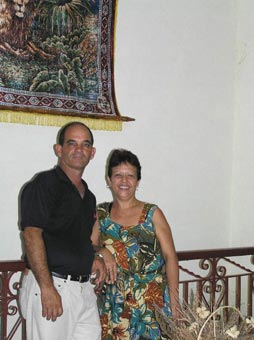

Casa particular
Casa Miguel y Noeli
Leoncio Vidal #1
Primer piso
Entre parque y Maceo
Santa Clara, Villa Clara, Cuba
Tel: +53 142 217444
Email: hostalpark@yahoo.com
Miguel and Noeli invite you to their casa particular (bed and breakfast) in the center of Santa Clara (Cuba).
Casa particular Miguel and Noeli is the only casa particular in Santa Clara that has a view of the Parque Vidal, the most important square of the city of Santa Clara. The casa particular offers a great room with two beds, air conditioning and a private bathroom. The room comes equipped with a refrigerator and lots of storage space.
The guests can also use of the living room, the balcony, the dining room and the kitchen. The house offers breakfast, lunch and supper. The prices: 3 CUC for breakfast and about 5 CUC the lunch or dinner (it depends on what you want to eat).
The food is basically Creole and abundant, even vegetarian plates can be served.
The price for the room per night is of 20 CUC in the high season and 15 CUC in the low season.
Friday, November 03, 2006
Home Rentals (casa particular)
Home Rentals (casa particular).
By Philips Peters. Lexington Institute.
September 2006
Along the main street of Vinales, a small town that is a major tourism center in western Cuba’s spectacular tobacco country, 33 of the 107 houses display signs that show they are licensed to lodge foreign visitors. Locals say there are about 300 private home rentals; if accurate, the private rentals outnumber the 173 rooms in the area’s three state-owned hotels.
On the other end of the island in the historic town of Baracoa, private rentals are available throughout the town. A long-time employee of the town’s only hotel says that they outnumber the hotel’s 34 rooms.
The renters’ prosperity has led to many renovations, he said, leading some to call their sector “Little Miami.” In Ciego de Avila, a provincial capital that is not a tourism hot spot, a cuentapropista who rents a room to tourists says he is one of 43 with a housing rental license. He obtained his license in 2004, with difficulty.
Tired of tussling with inspectors in his former pizza business, he decided to switch to a different line of self-employment. He prodded local housing officials for more than two years for a license to rent his spare room with a private bath and old Russian air conditioner. The main point of contention was the need to demonstrate that his family would not be overcrowded in its remaining space. He understands the Economics 101 concept of “elasticity of
demand;” he charges the low rate of $15-$25 per night that reduces nightly profit and sometimes makes it hard to pay his monthly tax, but he attracts more first-time customers.
A 2005 academic study of Cuba’s tourism industry noted that in addition to Cuba’s 41,000-room hotel capacity, there are 5,000 to 6,000 rooms available for tourists to rent in private homes. Our survey included twelve home rentals. On average, they had been in business three years and nine months and their average profit was $438 per month after paying an average tax of $267. The lowest tax per room rented was $100 in Ciego de Avila, the highest $250 in Havana’s Miramar neighborhood.
Housing rental is a lucrative but challenging line of selfemployment, made more difficult by taxes and regulatory requirements that have grown steeper in recent years. A 2003 law increased taxes by levying tax on common areas used by guests such as hallways, living and dining rooms, and patios, in addition to the per-room tax. A special license is required to offer food service to guests. Proprietors are required to keep a log of guests, their dates of stay, and their passport information, and they must keep records of their revenues.
The main challenge that these cuentapropistas cite is drumming up business, because they must make their monthly tax payment even if their revenues are zero.
Many advertise on the internet, using sites developed and hosted by friends overseas. Many also collaborate in informal referral networks and, following what one calls “the unwritten law of home rental,” they pay commissions to people outside those networks who bring them clients.
A woman who has rented two rooms in Havana since 1997 struggled to establish her business. “At first, no one knew me,” she said. She strived to achieve good quality and thereby establish a good word-of-mouth reputation. Her first big break was to rent to a group of Americans who generated lots of referrals and return business. But “the best thing that ever happened” was when her home was listed in the Lonely Planet tourism guide—a bit of free free publicity that now generates steady business.
http://lexingtoninstitute.org/docs/cubas_small_entrepreneurs.pdf
Friday, June 30, 2006
New rumours about closing Casa Particular
On a website of a non-official press oragnization from Cuba the following message appeared.
It indicates that the system of licenses for casas particulares might be ended due to a decrease in tourism.
Se pueden acabar los arrendamientos a extranjeros
Por Juan Carlos Linares Balmaseda
Bitácora Cubana, 30 de junio de 2006 – La Habana
Los permisos conferidos a propietarios de viviendas, para arrendar
apartamentos o parte de los mismos a extranjeros, podrían ser suprimidos.
En una reunión de representantes del Poder Popular municipales se dio a
conocer que los alquileres estaban creando situaciones de des ó rdenes
sociales, y se puso como ejemplo una casa en el municipio capitalino de
Centro Habana que ofertaba un servicio pornográfico.
"De hacerse efectiva la disposición restrictiva habría que reformar la
ley 65", detalló la testigo presencial del hecho.
El porcentaje de arrendatarios en la capital, al igual que en todo el
país, es mínimo, debido en gran medida a los altos impuestos cobrado por
la ONAT (Oficina Nacional de Administración Tributaria) y al acoso de
los inspectores estatales exigiendo sobornos.
Otros opinan que la baja turística actual, ocasionada por el mundial de
fútbol, acelerará la voluntad gubernamental de sacar a estos
competidores privados con tarifas de alojamientos más baratas que los
ofertados por la industria turística estatal.
http://www.bitacoracubana.com/desdecuba/portada2.php?id=2354
It indicates that the system of licenses for casas particulares might be ended due to a decrease in tourism.
Se pueden acabar los arrendamientos a extranjeros
Por Juan Carlos Linares Balmaseda
Bitácora Cubana, 30 de junio de 2006 – La Habana
Los permisos conferidos a propietarios de viviendas, para arrendar
apartamentos o parte de los mismos a extranjeros, podrían ser suprimidos.
En una reunión de representantes del Poder Popular municipales se dio a
conocer que los alquileres estaban creando situaciones de des ó rdenes
sociales, y se puso como ejemplo una casa en el municipio capitalino de
Centro Habana que ofertaba un servicio pornográfico.
"De hacerse efectiva la disposición restrictiva habría que reformar la
ley 65", detalló la testigo presencial del hecho.
El porcentaje de arrendatarios en la capital, al igual que en todo el
país, es mínimo, debido en gran medida a los altos impuestos cobrado por
la ONAT (Oficina Nacional de Administración Tributaria) y al acoso de
los inspectores estatales exigiendo sobornos.
Otros opinan que la baja turística actual, ocasionada por el mundial de
fútbol, acelerará la voluntad gubernamental de sacar a estos
competidores privados con tarifas de alojamientos más baratas que los
ofertados por la industria turística estatal.
http://www.bitacoracubana.com/desdecuba/portada2.php?id=2354
Subscribe to:
Posts (Atom)